Custom CNC Auto Parts, Machined to Your Drawing
Send the drawing or the old part. We match it with shops that machine automotive parts every week. Reply within 24 business hours.
Is your part worth machining?
Plenty of parts are cheaper to buy off the shelf or to have cast. Tick what applies to yours. Two or more ticks usually means a machine shop is the right call.
Parts buyers send us
- Intake manifolds and throttle adapters
- Turbo and exhaust flanges
- Hub adapters and wheel spacers
- Suspension brackets and pickup points
- Engine and gearbox mounts
- Pulleys and crank triggers
- Valve covers and timing covers
- Shifter bodies and linkage
- Brake caliper brackets
- EV battery busbars and tray hardware
If the part carries load or seals against something, say so in the RFQ. It changes which shops we send it to and how they quote the inspection.
Billet or cast?
Most automotive parts start life as a casting. Machining from solid is the other route. Which one is right comes down to how many you need and how much the part has to take.
Machined from billet
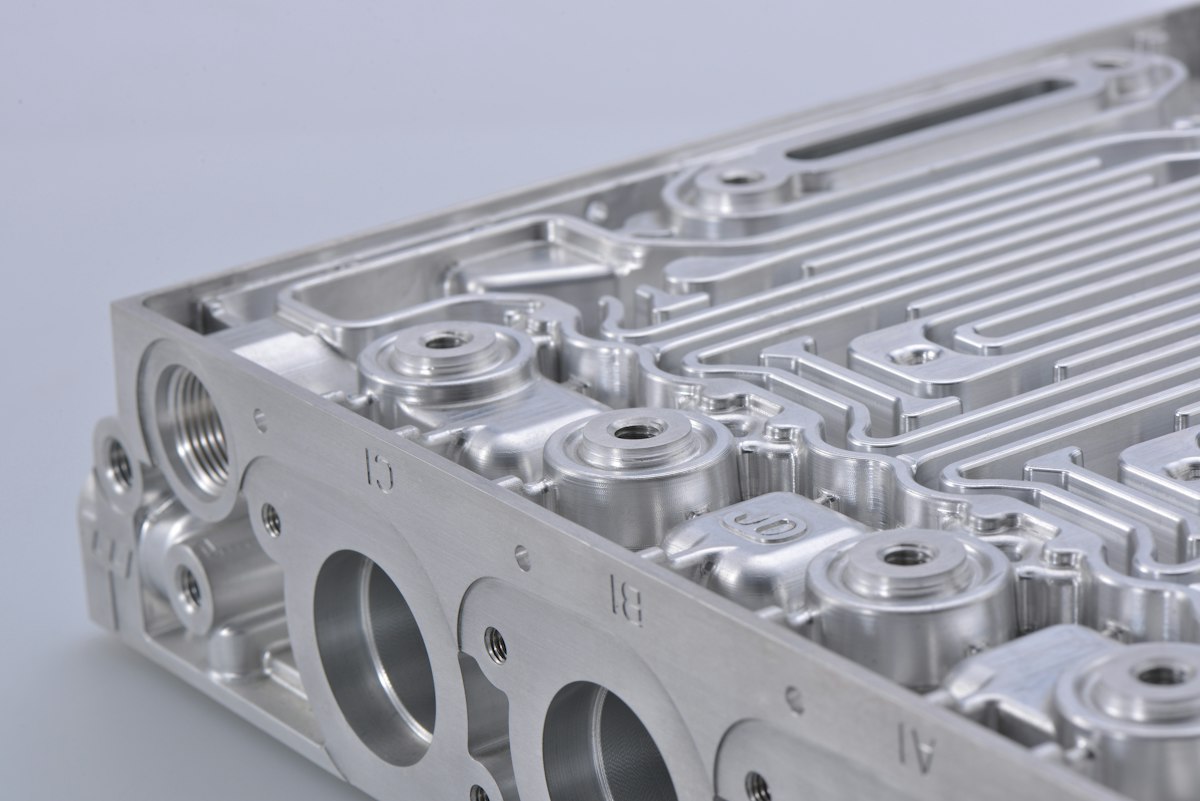
A solid block of 6061, 7075 or 4140 is cut down to the finished shape. No pattern, no tool, no minimum run.
- Worth it from 1 piece up to a few hundred
- Wrought material, so no porosity and predictable strength
- Revision two ships as soon as the program is edited
- You pay for the material that gets cut away
Cast then machined
Metal is poured into a mold, then the critical faces are machined. The tooling is paid once and spread over the run.
- Cheaper per part once you are past roughly a thousand
- Thin walls and hollow shapes billet cannot reach
- Weeks of tooling lead time before the first part
- A design change means a new or reworked tool
Materials and tolerances
What changes when you ask a shop to quote your part in each material. These are typical ranges, not promises. The shop that quotes confirms what it holds on your geometry.
| Material | What changes | Typical tolerance |
|---|---|---|
| Aluminum 6061-T6 | The default for billet brackets, covers and adapters. Anodizes cleanly and welds well. | ±0.02 to ±0.05 mm is common |
| Aluminum 7075-T6 | Roughly twice the yield strength of 6061 for loaded parts. Does not weld and corrodes faster bare. | ±0.02 to ±0.05 mm is common |
| Steel 4140 / 4340 | Shafts, hubs and anything that takes shock load. Usually machined soft then heat treated. | Depends on the heat treat sequence |
| Stainless 304 / 316 | Exhaust hardware, fuel and brake fittings, parts that live under the car in salt. | ±0.02 to ±0.05 mm is common |
| Titanium Grade 5 | Weight critical race parts and fasteners. Slow to cut, so expect a higher price per piece. | ±0.02 mm is a safe target |
| Brass and bronze | Bushings, bearing carriers and fittings where a softer running face is wanted. | ±0.02 to ±0.05 mm is common |
| Delrin (POM) and PEEK | Bushings, spacers and trim parts. Plastics move with heat and moisture, so leave room. | ±0.05 mm is realistic |
Who sends us automotive RFQs
Each corner of the trade brings its own paperwork. Mention material certs, first article inspection or a road legal requirement in your RFQ so we match shops that already work that way.
Performance and tuning
Intake, charge pipe and turbo hardware, plus adapters for parts that were never meant to bolt together.
Restoration and classic
Parts that stopped being made decades ago, reverse engineered from the original or from what is left of it.
EV conversion
Motor and gearbox adapter plates, battery tray hardware, busbars and charge port mounts.
Motorsport
One-off uprights, brackets and mounts on deadlines set by the next race, not the next quarter.
Powersports
Motorcycle, ATV and marine parts in small batches where tooling a casting makes no sense.
Fleet and commercial
Replacement parts for equipment still in service after the supplier stopped supporting it.
Browse by part, material and process
Reference pages for planning an RFQ: what each group of parts is made from and how it is machined.
Parts by vehicle system
Engine, turbo, drivetrain, suspension, brakes, mounts, cooling, EV and interior, with the usual material for each.
Materials
Aluminum, steel, stainless, titanium, brass, copper and plastics, compared on weight, cutting and finish.
Machining processes
Milling, multi-axis, turning, mill-turn, boring and EDM, with typical tolerances and what each suits.
How it works
One RFQ from you. A short list of shops that fit the part. No bidding platform and nobody standing between you and the shop on the order.
Send your RFQ
Upload a STEP file, a PDF drawing or photos of the old part, then tell us material, quantity, tolerance and when you need it. Takes about three minutes.
We match up to 3 shops
We read the part and pick shops whose machines, materials and part size fit it. You hear from us within 24 business hours.
Shops quote you directly
Each shop contacts you with a price and a lead time. You compare, ask questions and order from the one you pick.
What drives the price of a billet part
Five things decide most quotes. When a price comes back higher than you expected, one of these is usually the reason, and two of them you can change on the drawing.
- Setup and programmingCAM programming, fixtures and the first proving cut are paid once per order. On 1 to 10 pieces they are most of the price.
- MaterialTitanium and 4340 cost more per kilo and cut several times slower than 6061. Billet size matters too, since you pay for what gets cut away.
- ToleranceEvery step tighter than you need adds machine time and inspection. Tolerance the bores and sealing faces, leave the rest open.
- QuantitySetup spreads over more parts as quantity rises, so the price per part drops fast past the first few dozen.
- FinishingAnodizing, powder coat, zinc plating and heat treatment add cost and a few days of lead time, usually at a second vendor.
Have a drawing ready?
Send the short version now and we will ask for whatever is missing. To give full details up front, use the full RFQ form.
Your files go only to the shops we match. Ask for an NDA and nothing is shared until it is signed.
Run a machine shop? Take the automotive RFQs that fit it.
You see a preview of each request before you pay for it, then deal with the buyer directly. We take no commission on the order.
Questions buyers ask
Something else? Email .
Is this service free for buyers?
Yes. You pay nothing to send an RFQ or to receive quotes. Shops pay us for matched requests. Price, lead time and terms are agreed between you and the shop.
Do you machine the parts yourselves?
No. We are a matching service, not a machine shop. We read your request and pass it to shops that machine automotive parts. They quote you, they make the part and you order from them.
I only have the old part and no drawing. Can a shop still quote it?
Often yes. Send photos with a ruler or caliper in frame, the critical dimensions you have measured and what the part bolts to. Shops that reverse engineer from a sample will tell you what they need to scan or measure. A broken original still works if the mating faces are intact.
Who sees my drawing and my contact details?
Shops first see a short preview: part type, material, size, quantity, tolerance, region and deadline. It carries no name, company or files. Your details and files go only to the shops we match, up to 3. Tick the NDA box and we hold the files until it is signed.
How many quotes will I get and where are the shops?
Up to 3. If only one or two shops suit the part we send fewer rather than fill the list. You pick a preferred region on the form, so you can ask for North America, Europe, Japan, Korea or the rest of Asia, or leave it open and let us match on fit alone.
What is the smallest order, and which files should I send?
One piece is normal for a prototype or a restoration part, though the price per part is high because programming and setup are paid once. STEP or IGES for the 3D model plus a PDF drawing with tolerances gets the most accurate quote. DWG, DXF and dimensioned photos also work.
Guides for auto parts buyers
New to this? How to get a custom auto part machined walks through the whole job, from deciding whether to machine it at all to reading the quotes.
- Buying Guide
Aftermarket Car Parts Trade Shows 2027: Dates and Plan
Aftermarket car parts trade shows for 2027 and 2028: SEMA, PRI, Tokyo Auto Salon, EQUIP AUTO, Essen and Automechanika, with organiser dates and a visit plan.
- Buying Guide
Billet Differential Covers and Rear End Parts: Specs
Billet differential cover guide: bolt pattern, flange flatness, sealing finish, fill and drain ports, bearing cap support and material for rear end parts.
- Process
Press Fits and Bearing Bores in Machined Automotive Parts
How to specify bearing bore tolerance on automotive parts: ISO fit classes, aluminum housings that loosen when hot, bore finish, chamfers and how to inspect.